

Buying a Court-Ordered Home in BC: Is It a Good Deal?

The Pros, Cons & Mortgage Risks Every Homebuyer Should Understand
Imagine finding a home you love at a price that seems too good to be true. Then you notice the listing says “Court-Ordered Sale.”
Is it a bargain? Is something wrong with the property? Can you still get a mortgage with only 10% down?
Buying a court-ordered home in British Columbia can be a great opportunity, but there are risks you need to understand BEFORE making an offer!
What Is a Court-Ordered Sale?
A court-ordered sale happens when a BC court becomes involved in selling a property.
This often happens when homeowners fall behind on mortgage payments and the lender begins foreclosure proceedings. It can also happen because of divorce, estate disputes, or other legal matters.
Unlike a regular home sale, a judge may need to approve the purchase before it becomes final.
This adds another step and possibly more competition.
The Pros: Why Buyers Are Interested
- Potential Bargain: Some properties are listed at attractive prices. However, competing buyers can push the final selling price higher.
- Less Emotional Negotiating: Lenders are generally focused on recovering their money rather than negotiating based on personal feelings.
- Opportunity to Build Equity: Buying a home for $700,000 when similar properties are worth $750,000 could mean instant equity. But repairs and unexpected expenses can quickly reduce those savings.
The Cons: What Could Go Wrong?
1. Buying “As Is, Where Is”.
The seller generally won't guarantee the property's condition or pay for repairs. You could discover missing appliances/cupboards, roof leaks, plumbing problems, electrical issues, holes in the walls or mold after moving in. Always arrange a home inspection!
2. Another Buyer Could Beat Your Offer
Even if the seller accepts your offer, another buyer may submit a better offer at the court hearing.
You could spend money on inspections, appraisals, and legal advice but still lose the property.
3. Unconditional Offers
In regular purchases, buyers often include conditions called subjects, such as financing, inspections, and reviewing strata documents.
For court-ordered sales, these conditions generally need to be satisfied or removed before the court hearing.
Once the court approves your unconditional offer, you're legally committed to completing the purchase.
IMPORTANT: BC's usual three-business-day Home Buyer Rescission Period doesn't apply to purchases made under a court order.
4. Unexpected Costs and Delays
Court dates, property access, repairs, and occupants who haven't moved out can create unexpected problems.
Always keep extra savings available!
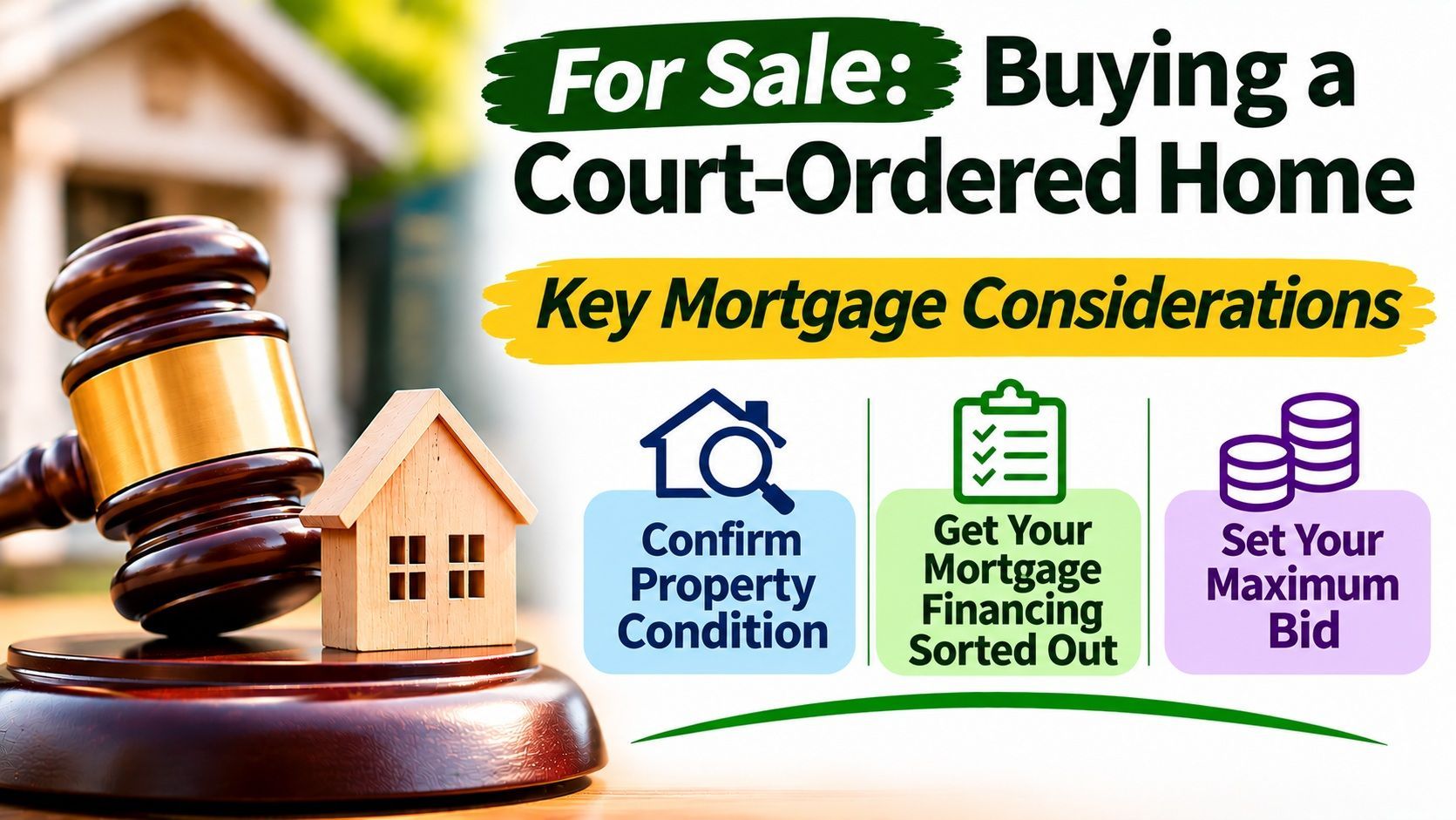
How Does Mortgage Financing Work?
This is often the BIGGEST challenge!
You generally need to arrange mortgage financing BEFORE knowing whether you'll actually win the property.
Step 1: Get Mortgage Pre-Approval
Your mortgage broker reviews your income, down payment, debts, and credit history to establish your borrowing power.
However, pre-approval doesn't guarantee financing. The lender must also approve the property.
Step 2: Make an Offer and Arrange Financing
Your initial offer may include conditions for financing, inspections, and reviewing strata documents.
Your mortgage broker works with the lender to arrange financing, which may require an appraisal.
Ideally, all important lender and insurer requirements should be satisfied.
Step 3: Prepare for the Court Hearing
Other buyers may submit competing offers following BC's court procedures.
The judge considers price, deposit, completion date, and other terms.
The highest offer doesn't automatically win!
Step 4: What Happens If You Win?
If the judge approves your unconditional offer, you're legally committed to completing the purchase.
Your lender must still satisfy any outstanding requirements before releasing mortgage funds.
If financing falls through, you could lose your deposit and face additional financial consequences.
What If You Increase Your Offer at Court?
Imagine you've arranged financing for a $700,000 home.
| Item | Amount |
|---|---|
| Original purchase price | $700,000 |
| Approved mortgage | $560,000 |
| Down payment | $140,000 |
| Competing buyer's offer | $725,000 |
| Your revised offer | $735,000 |
You've increased your offer by $35,000, but your lender has only approved a $560,000 mortgage!
You cannot assume the lender will increase your mortgage.
If the appraisal supports only $700,000, you may need to provide the additional $35,000 yourself.
Establish your maximum SAFE bidding amount BEFORE attending court!
Can You Buy With Only 10% Down?
YES! Mortgage default insurance may be available for an eligible court-ordered property with 10% down.
For example, purchasing a $700,000 owner-occupied home:
| Item | Amount |
|---|---|
| Purchase price | $700,000 |
| Down payment (10%) | $70,000 |
| Mortgage before insurance | $630,000 |
| Mortgage default insurance | Additional cost |
However, approval isn't automatic!
Now both the mortgage lender AND mortgage insurer must be comfortable with the property.
They'll consider:
- Occupancy: With Mortgage Default insurance, you must meet owner-occupied requirements.
- Property Condition: Is the home safe, livable, and in acceptable condition?
- Appraisal: Does the appraised property value support the purchase price?
- Financing: Have the lender and insurer approved the mortgage?
- Court Approval: Has the judge approved the purchase?
Properties requiring major repairs or unsafe to occupy may not qualify for traditional mortgage financing.
IMPORTANT: Increasing your offer at court will probably require new lender and mortgage insurer approval.
How Can You Protect Yourself?
Before purchasing a court-ordered home:
- Work with a REALTOR® experienced in court-ordered sales.
- Arrange an inspection and review strata documents, if applicable.
- Work with your mortgage broker to confirm lender and mortgage default insurer requirements.
- Ask a real estate lawyer to review the contract.
- Establish your maximum affordable bid and keep extra savings available.
The Bottom Line: Is It Worth It?
A court-ordered home can be a great opportunity, but a low price doesn't always mean a good deal!
The biggest challenge is securing mortgage financing before the court hearing, especially when mortgage default insurance is required.
Remember, the best home isn't necessarily the cheapest. It's one you can afford, finance, and comfortably maintain.
As a Mortgage Broker, my role is to help you understand your mortgage options and financing risks BEFORE you make a commitment.
Thinking about buying a court-ordered home in BC?
Let's discuss your mortgage options before you make an offer, so you can move forward with confidence.
Kelly Hudson
Mortgage Broker
Mortgage Architects – A Better Way
Mobile: 604-312-5009
Kelly@KellyHudsonMortgages.com
www.KellyHudsonMortgages.com