


BC Property Assessment vs. Home Appraisal (Updated for 2026)
What Is BC Assessment?
Every January, British Columbia homeowners receive their annual
Property Assessment Notice.
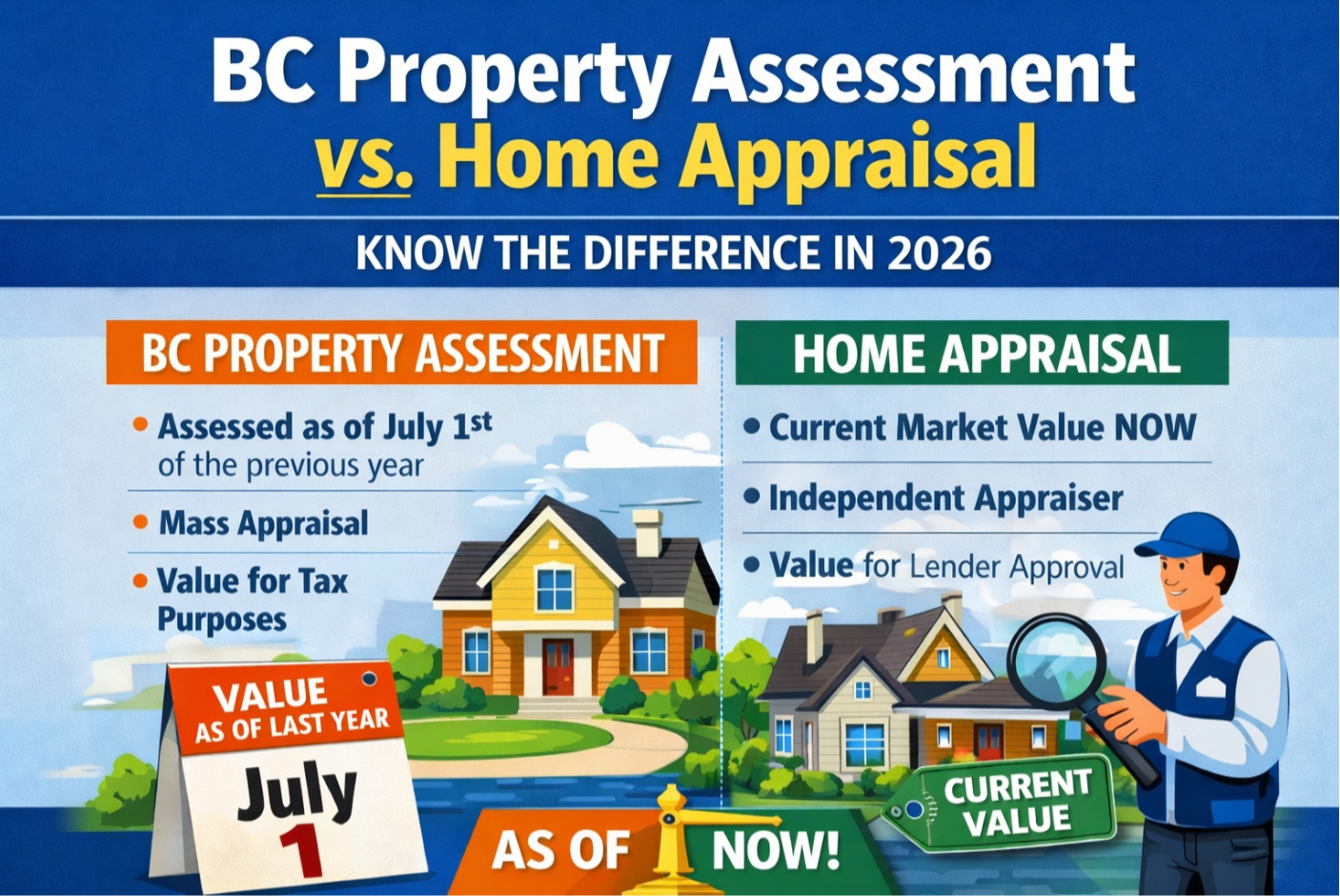
BC Assessment is a provincial Crown corporation responsible for valuing all real estate in British Columbia for property tax purposes. Each year, BC Assessment provides an estimate of a property’s
fair market value as of July 1 of the previous year.
👉 To view the most recent assessment for any property, visit the BC Assessment website and search by address.
Important things to understand about BC Assessments
- Timing matters. Your 2026 assessment reflects an estimated market value as of July 1, 2025, not today.
- Markets change quickly. In active or volatile markets (like Greater Vancouver and the Fraser Valley), values can shift significantly in a matter of months.
- Mass appraisal methods are used. BC Assessment relies on algorithms and broad market data rather than a detailed, in-person inspection of your specific home.
Because of this, an assessed value can differ — sometimes substantially — from:
- a lender-ordered mortgage appraisal, or
- a private real estate appraisal completed for buying or selling.
BC real estate context (2026)
As we move through 2026, BC housing markets continue to be influenced by:
- interest-rate expectations and changes by the Bank of Canada,
- affordability pressures,
- regional supply constraints, and
- local economic conditions.
This means
BC Assessment values should be used only as a starting point, not as a precise indicator of what a property will sell for or what a lender will accept as value.
Bottom line: Do not rely on BC Assessment for the exact value of a property you’re planning to sell, purchase or refinance.
What Is a Home Appraisal?
A
home appraisal is a professional report that estimates a property’s
current fair market value.
There is often
little to no direct connection between BC Assessment values and a lender-required appraisal.
That’s why lenders almost always require an appraisal when financing a purchase, refinance, or mortgage switch.
Why lenders require appraisals
Lenders want to confirm what the property is worth right now, in the current market, before they agree to lend against it.
An appraisal helps the lender answer one key question:
Is this property adequate security for the mortgage being requested?
Who completes the appraisal?
A home appraisal is completed by a licensed, regulated professional appraiser who:
- is independent and unbiased,
- follows strict professional standards, and
- is trained to analyze market data, comparable sales, and property features.
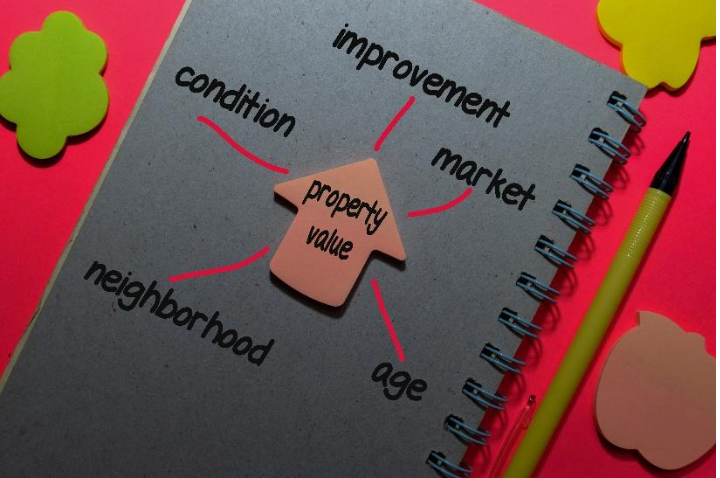
When determining value, an appraiser considers:
- the home itself (size, layout, condition, upgrades),
- the property and lot,
- location and neighbourhood,
- amenities, zoning, and market demand.
Who Pays for the Home Appraisal?
In most cases,
the borrower pays for the appraisal, but the report is prepared
for the lender.
This often surprises buyers:
- Even though you pay for the appraisal, it is not automatically provided to you.
- The lender (or brokerage) is considered the appraiser’s client.
Think of the appraisal fee as an
administrative cost to establish today’s market value for lending purposes.
Why you may not receive a copy
Appraisers are required to deliver their report according to the lender’s guidelines. Ownership of the report rests with the lender, not the borrower.
This is especially important when an appraisal comes in
lower than the purchase price.
Example:
- Purchase price: $600,000
- Appraised value: $550,000
In this case, the lender will typically base financing on the
lower value, which can affect:
- required down payment,
- mortgage approval, or
- whether the deal proceeds at all.
👉 Related blog: What Happens When Your Home Appraisal Comes in Low?
The main reason borrowers pay for the appraisal is practical: if the mortgage doesn’t complete, the lender does not want to absorb the cost of an appraisal without getting the loan.
Other Reasons to Get an Appraisal
Beyond mortgage financing, appraisals are commonly used to:
- establish a reasonable selling price,
- determine replacement cost for insurance,
- dispute property taxes,
- settle a divorce or separation,
- settle an estate,
- support negotiations in a real estate transaction,
- meet government or legal requirements,
- support litigation.
Getting Your Home Ready for an Appraisal
An appraisal report typically includes:
- photos of the property and home,
- details about the neighbourhood and comparable sales,
- the appraiser’s final opinion of value,
- a summary explaining how that value was determined.
👉 Related blog: Need an Appraisal – 7½ Tips for Success
Important lender rules
Most lenders maintain an
approved appraiser list and require that:
- the appraisal is ordered by the broker or lender, and
- the appraiser holds the appropriate professional designation.
Appraisals ordered directly by homeowners are often rejected by lenders to avoid potential bias or interference.
Home Appraisal Costs in 2026
Appraisal fees vary based on several factors. As a general guideline:
- Most standard residential appraisals start around $450 + GST, and
- Costs can increase depending on:
- location,
- property value,
- complexity (unique properties, acreage, rental analysis),
- availability of comparable sales,
- urgency (rush appraisals).
BC Assessment vs. Appraised Value: The Key Takeaway
- BC Assessment = mass-produced estimate for tax purposes, based on last year’s market
- Home Appraisal = professional, independent opinion of value today
For mortgage lending,
the appraisal always wins.
Thinking of Buying or Refinancing?
As you can see, there’s a lot to consider when it comes to property values, lending rules, and market timing.
If you’re thinking about buying, refinancing, or switching lenders — or you’re unsure how an appraisal might affect your plans — let’s chat. I’m happy to walk you through it.
Kelly Hudson
Mortgage Broker
604-312-5009
Kelly@KellyHudsonMortgages.com
www.KellyHudsonMortgages.com