BC Provincial Budget 2016 – Things of Note for Home Buyers
KellyHudsonMortgages • February 17, 2016
 Breaking News:
The BC Minister of Finance has announced several changes* that will impact home buyer’s including:
- The first time home buyer’s exemption will remain the same at $475,000
- Newly-built homes up to $750k will be property transfer tax (PPT) exempt, but only
for Canadian citizens and permanent residents.
- This exemption applies to all homes that are owner-occupied for at least a year after purchase date (qualifications for this do not include relatives).
- This is a potential savings in closing costs of up to $13,000.
- This is in addition to the existing First Time Home Buyers’ Program for properties up to $475k.
- Homes purchased for over $2 million have an increase in property transfer tax of 1% bringing the total tax which was 2% to 3%.
- The 3% tax is only paid on the amount over $2,000,000.00, not the full price.
- This tax applies to both new and used homes.
- Buyers will be required to provide their citizenship information, disclosing their country of residence for all property transactions. This information will be monitored by the government
- This hasn’t been done since 1998.
- The beneficial ownership of properties held by corporations will also be tracked.
* the full details of the changes haven’t been released, so we will know more shortly.
There is some good news for First Time Home Buyer’s and those looking to upgrade to a brand-new home.
Contact me, so I can give you an unbiased view of which mortgage product is right for you since I have access to 90+ financial institutions.
My services for a typical mortgage are FREE and I help people save money!
Let’s have a chat to discuss your best mortgage option, not the banks!
Kelly Hudson
Mortgage Expert
Mobile: 604-312-5009
Kelly@KellyHudsonMortgages.com
www.KellyHudsonMortgages.com
Kelly Hudson
MORTGAGE ARCHITECTS
RECENT POSTS

For many Canadians, their home is their biggest financial asset. After years of homeownership, they may have paid off most (or all) or all their mortgage and built a lot of equity in their home. The problem: You can own a valuable home and still struggle to pay your monthly bills. You've probably heard the phrase “house rich and cash poor.” This is exactly what it means. For Canadian homeowners aged 55 and older, a reverse mortgage is one option worth looking at. It's definitely NOT the right solution for everyone. But for some homeowners, it can provide extra cash while allowing them to stay in the home they love. What Is a Reverse Mortgage? A reverse mortgage allows homeowners 55+ to access some of the equity in their home without selling it. Unlike a regular mortgage, you don't normally have to make monthly mortgage payments. Instead, interest is added to the amount you borrowed, so the balance grows over time. The mortgage is typically repaid when the home is sold, the homeowners permanently move out, or the last homeowner dies. And one of the biggest misconceptions I hear? The bank does NOT own your home. You do. You stay on title and continue to own your home. The money you receive is also generally tax-free because you're borrowing the money - it's not income. What Does “House Rich, Cash Poor” Look Like? Let's say you've lived in your home for 30 years. Your mortgage is paid off and your home is now worth $1 million. Sounds pretty good, right? But your retirement income may come from CPP, OAS, a pension and your savings. At the same time, groceries, property taxes, insurance, utilities and everything else seem to keep getting more expensive. So, while you may have hundreds of thousands of dollars in home equity, your monthly budget can still feel tight. You have the money. It's just tied up in your house. A reverse mortgage is one way to access some of that equity without having to sell and move. What Could You Use the Money For? There are generally no restrictions on how you use the money. Everyone's situation is different, but I've seen homeowners consider a reverse mortgage to: Pay off an existing mortgage, credit cards or other debts Add to your monthly retirement income Make home repairs or accessibility upgrades so you can stay in your home longer Pay for in-home care Help children or grandchildren financially Cover unexpected expenses or create an emergency fund Depending on the product, you may also have choices about how and when you receive the money. You don't necessarily have to take everything at once. Why Not Just Sell and Downsize? This is usually one of the first alternatives we talk about. Downsizing can make perfect sense—but it's not always as easy or as inexpensive as people think. A smaller home or condo can still be expensive, especially in many BC communities. Then add real estate commissions, legal fees, moving expenses, strata fees and other costs. And there's another part of this decision that has nothing to do with numbers. Your home is more than an asset on a balance sheet. Maybe you've lived there for 30 years. Your friends are nearby. You know your neighbours. Your doctor, family and community are close. Maybe you simply love your home and don't want to move. For many retirees, being able to stay in their home is an important part of their retirement plan. So... What's the Catch? There isn't any free money here. Reverse mortgage rates are typically higher than traditional mortgage rates. And because you aren't making regular mortgage payments, the interest gets added to the amount you borrowed. That means the amount you owe grows over time and the equity left in your home can decrease. There can also be appraisal, legal, setup and closing costs. Depending on the mortgage and when you repay it, there may also be a penalty. And remember—you still own the house. That means you're still responsible for maintaining it, keeping it insured and paying the property taxes. That's why it's important to look beyond the interest rate and understand the long-term costs. What About My Children's Inheritance? This is a conversation worth having with your family. A reverse mortgage will normally mean there is less equity left in your home for your estate. For some homeowners, leaving as much as possible to their children is extremely important. Others look at it differently. They would rather use some of the equity they've spent decades building to make their own retirement more comfortable. And some parents decide they'd rather help their children or grandchildren now , while they're still here to see them enjoy it (i.e. a gifted down payment). There's no right or wrong answer. It's your home, your equity and your decision. Reverse Mortgage or Home Equity Line of Credit (HELOC) ? A HELOC is another way to access the equity in your home. But there's an important difference. With a HELOC, you need enough income to qualify, and you'll need to make monthly payments. That can be difficult for someone who is retired and has a valuable home but limited monthly income. A reverse mortgage works differently because it's designed for older homeowners. One option isn't automatically better than the other. Maybe a HELOC makes more sense. Maybe refinancing makes more sense. Maybe a reverse mortgage does. It depends on your income, age, equity, monthly cash flow and, most importantly, what you're trying to accomplish. Is a Reverse Mortgage Right for You?
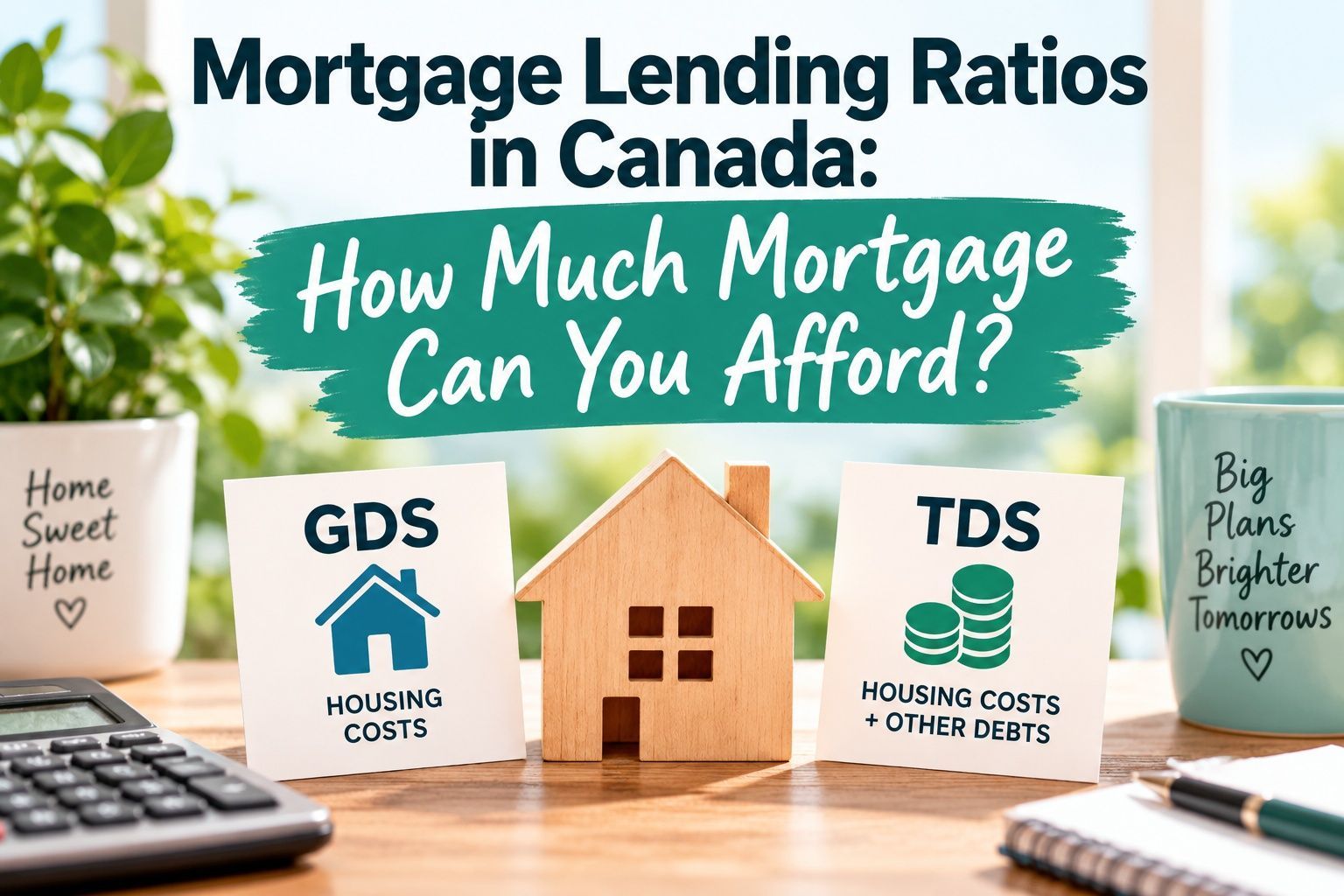
If you're thinking about buying a home in BC, one of the first questions you probably have is: How much mortgage can I qualify for? Your income is certainly important, but it isn't the only number a mortgage lender looks at. Lenders also consider your debts, credit history, down payment, property costs and something called your mortgage lending ratios . The two ratios you'll hear about most often are GDS (Gross Debt Service) and TDS (Total Debt Service) . The names sound complicated. The math really isn't. Understanding how GDS and TDS work can give you a much better idea of what you may qualify for — and why two people earning the same income could qualify for very different mortgage amounts.