Mortgages for Expensive Homes – Not as Easy as it Sounds!
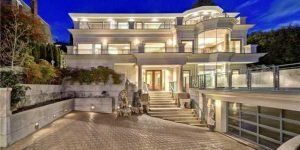
Large home purchases that require a mortgage present unique challenges in the Canadian Mortgage market. Sliding scales, director approval, multiple reviews, it all adds up to difficultly getting larger mortgages approved, unless you’re working with an experienced mortgage broker.
In 2012 the government of Canada removed the mortgage insurers ability to approve mortgages of $1 million (or more) with less than 20% down payment. As a result of this change, the minimum down payment for homes over $1 million starts at 20% of your purchase price and increases.
Since any home purchase over $1 million cannot be insured against default, the lender applies a sliding scale to reduce their potential for loss if the borrower defaults. Consequently, large mortgages present a unique challenge, especially in the Vancouver/Toronto market.
Depending where you live, most lenders consider home purchases over $500-750K to be large enough for them to want to mitigate their risk. In larger urban centres like Vancouver & Toronto, lenders will consider purchases up to $1 million before increasing the down payment with sliding scale.
Sample sliding scales for Vancouver/Toronto
- 20% down payment on the first $1,000,000, plus 40% down payment on the balance over $1,000,000
- 20% down payment on $1,250,000, plus 50% down payment on the balance over $1,250,000
- 20% down payment on $1,500,000 plus 40% down payment on the balance over $1,500,000
Every lender has their own risk level for expensive home purchases.
As you can see, the typical lender sliding scale for jumbo mortgages is very punitive and can result in a much higher down payment when purchasing a home over $1 million.
Lenders want to alleviate the higher risk on purchases of expensive homes, because there is a smaller pool of potential buyers compared to lower home prices. This makes expensive homes more vulnerable to market corrections. If there is a price correction, it can be more difficult for lenders to get their money back, should they need to foreclose.
- Housing prices in Vancouver have been on the decline since 2016/2017: BC housing market shows signs of moderation as some property values drop by 10 per cent

Lenders are risk adverse! When they perceive a risk, they are either going to charge higher interest rates OR lessen their risk with a sliding scale, requiring home buyers to put a larger down payment on properties over their threshold.
Example:
- Base line with no sliding scale home purchase $1,500,000
- Minimum 20% down payment = $300,000
- Down payment required for a home purchase with
Sliding Scale 20% down payment on the first $1,000,000, plus 40% down payment on the balance over $1,000,000
- 20% down payment on $1,000,000 = $200,000
- 40% down payment on $500,000 (amount over $1M) = $200,000
- Down payment required $400,000
20% down payment = $300K versus sliding scale $400K down payment required – Yes sliding scale can make a big difference in your required down payment!
Sliding scale is designed so that as a property’s price increases, you need a larger down payment.
- Therefore, the maximum loan/mortgage amount available decreases on a proportionate basis.
To minimize the size of your down payment, you need an experienced mortgage broker who works with a multitude of lenders, giving you the most flexibility with sliding-scale.
Other points to keep in mind with a large mortgage:
- Pay attention to the terms and conditions of your mortgage, especially your prepayment penalties.
-
- Larger loan amounts amplify the differences in the penalties charged by different lenders.
- Most large mortgage loans must be escalated up the ranks for management approval. This means it can take lenders an extra day (or two) to get your approval back so your subject removal date may need to be longer.
-
- Typically, I recommend 10 business days for subject removal on large mortgages.
Another important point to keep in mind, when real estate prices flatten or drop, lenders can become much more conservative when underwriting higher-end real estate. As such, there can be wide disparity in the value different lenders will assign to a property.
Partnering with an independent mortgage broker will help ensure that you and your property are matched with the lender who is offering the best fit for your situation.
If you know anyone looking for a high-end home, who needs a mortgage, I can help them arrange the financing. We’ll work together to figure out a budget and down payment (based on sliding scale). Then, we will work with a lender for a pre-approval, so we have a clear picture for affordability. BLOG Pre-Approved for Your Mortgage… What Does that Really Mean???
Mortgages are complicated, especially over $1 million… you need to engage an expert!!! Give me a call and let’s discuss a mortgage that works for you (not the bank)!