

Rental Property Management in BC

Kelly Hudson • September 19, 2025

Greater Vancouver Property Management Fees – What You Need to Know 

Owning a rental property in Greater Vancouver can be a smart way to build wealth. But if you have ever tried to manage a rental on your own, you already know it takes more than just collecting rent. From finding the right tenant to fixing leaky faucets, the work can add up fast.


That’s why many owners hire a property manager. A good property manager takes care of the day-to-day tasks and helps you avoid costly mistakes. But before you sign a contract, you’ll want to understand how property management fees work and what you get for your money.


Let’s break it down in simple terms.

What Is a Property Manager?

A property manager is a licensed professional who looks after your rental property for you. In British Columbia, property managers must complete special training and get a licence from the BC Financial Services Authority (BCFSA). This means they follow strict rules and stay up to date on important laws such as the BC Residential Tenancy Act.


A good property manager knows Greater Vancouver’s rental market and keeps up with changes to taxes and local rules. For example, the City of Vancouver’s Empty Homes Tax is now 5% of the property’s assessed value for 2025—something an experienced manager will help you handle.


What Does a Property Manager Do?
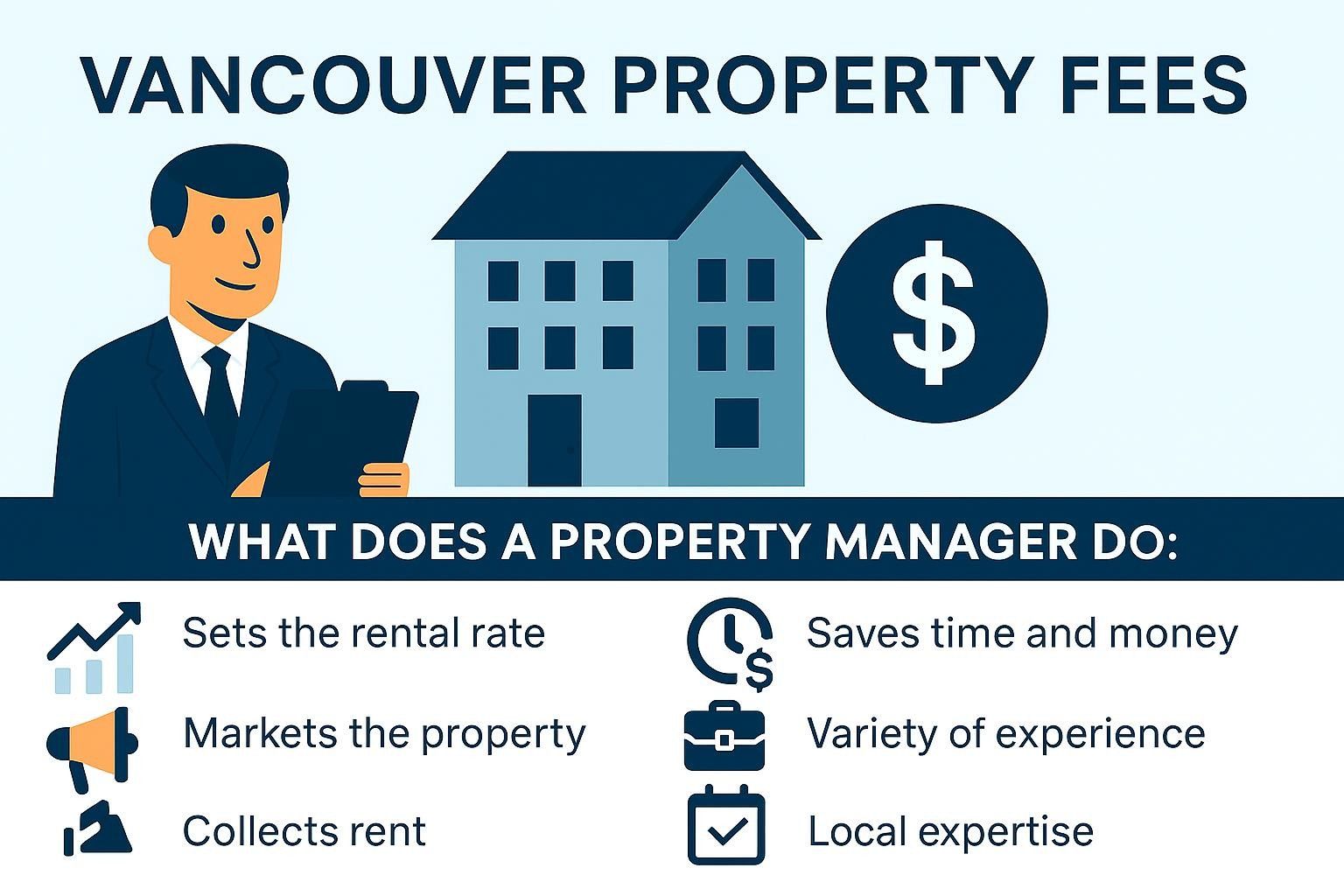
A property manager wears many hats. Here are some of the main jobs they handle:

  • Set the right rent. They study market rents, so your rent is high enough to earn a good return, but not so high that it scares away renters.
  • Advertise your place. From taking great photos to posting on popular rental sites they make sure people see your property.
  • Screen tenants. They check credit, references, and employment so you get reliable tenants who pay on time.
  • Handle the paperwork. They prepare and sign the lease (called a tenancy agreement) and organize move-in and move-out inspections.
  • Collect rent. They make sure the rent shows up in your bank account every month.
  • Take care of repairs. Whether it’s a broken dishwasher or regular maintenance, they arrange for trusted tradespeople to get the job done.
  • Keep records. Each month you get a statement showing rent collected and expenses paid. At year-end you get a summary that makes tax time easier.
  • Special services. For owners who live outside Canada, they can also look after the required non-resident tax filings.


How Much Do Property Management Fees Cost?

Fees can vary depending on the type of property and the company you hire. But here are the typical 2025 rates in Greater Vancouver:


Why Hiring a Property Manager Can Be Worth It

It might seem cheaper to do everything yourself. But a property manager can actually save you both time and money.

1. Less Stress, More Free Time
No late-night phone calls about a broken furnace. No chasing tenants for late rent. Your manager handles it.

2. Better Tenants, Fewer Vacancies
Managers often have a list of pre-screened tenants and work with relocation companies. This can mean your place is rented faster and stays occupied.

3. Local Knowledge
Vancouver’s rental rules and taxes change often. A licensed manager keeps you on the right side of the law.

4. Bulk Savings on Repairs
Because they work with many properties, managers often get better prices from contractors and can pass those savings on to you.

5. Peace of Mind—Even From Far Away
If you live in another city or province, a property manager can be your eyes and ears on the ground.


Tips for Choosing the Right Property Manager

  • Check their licence. Make sure they are licensed with the BCFSA.
  • Compare more than one company. Get quotes and see what services are included.
  • Read the contract. Know exactly what you’re paying for and any extra fees.
  • Ask for references. Talk to other owners to hear about their experience.

The Bottom Line

Property management fees in Vancouver—usually 7%–10% of the rent plus a tenant-placement fee—aren’t just another expense. They’re an investment in protecting your property and your time.

A good property manager keeps your rental running smoothly, makes sure you follow the rules, and helps you get the best return on your investment. For most landlords, that peace of mind is worth every penny.

Need help navigating mortgage financing options for rental properties? I’d be happy to help!


Kelly Hudson
Mortgage Broker

604-312-5009

Kelly@KellyHudsonMortgages.com

www.KellyHudsonMortgages.com

Kelly Hudson
MORTGAGE ARCHITECTS
RECENT POSTS 

By Kelly Hudson February 18, 2026
If you’re 55 or older and own your home, chances are you’ve heard about reverse mortgages. Sometimes they’re described as a “retirement lifesaver.” Other times they sound risky or confusing. The truth? They’re neither magical nor terrible. They’re simply a financial tool — and like any tool, they work well in some situations and not so well in others – EDUCATION is the key! Let’s break it down in plain English. So… What Is a Reverse Mortgage? A reverse mortgage allows you to borrow money against the value of your home — without making monthly mortgage payments. Instead of you paying the lender every month, the interest gets added to the balance. The loan is typically repaid when: The home is sold You move out permanently Or you pass away In Canada, reverse mortgages are currently offered by: HomeEquity Bank (CHIP Reverse Mortgage) Equitable Bank Bloom Financial You still own your home and your name stays on title. That part often surprises people. How It Works (Simple Version) To qualify: You must be 55 or older You must own your home (you can still have a regular mortgage — it just needs to be paid out) You can usually borrow up to about 55% of your home’s value (the older you are, the more you may qualify for) You don’t make monthly payments. But you must continue to: Pay property taxes Keep home insurance in place Maintain the home The money you receive is tax-free. It can come as: A lump sum Monthly advances Or a combination of both That flexibility is one reason many retirees like this option. Why Do People Consider Reverse Mortgages? Most of the homeowners I speak with aren’t looking for luxury spending money. They’re trying to solve real life situations: Covering rising living costs Paying off debt before retirement Managing health or care expenses Staying in their home longer Helping adult children with a down payment For many Canadians, their house is their largest asset — but it doesn’t create monthly income. A reverse mortgage turns some of that home equity into usable cash. The Pros (The Reasons People Like Them) 1. No Monthly Mortgage Payments This is the big one. If you’re living on CPP and OAS, removing a monthly mortgage payment can dramatically reduce stress. Cash flow improves immediately. 2. You Can Stay in Your Home Most people I meet don’t want to move. They love their neighborhood. Their friends are nearby. Family visits often. A reverse mortgage can allow you to age in place instead of selling before you’re ready. 3. The Money Is Tax-Free Because it’s borrowed money — not income — it does not affect: Old Age Security (OAS) Guaranteed Income Supplement (GIS) That’s a major advantage compared to withdrawing from investments. There are no rules about spending. Some clients use the funds to stay in place – health care at home. Some clients renovate. Some travel. Some gift funds to children. Some simply create a safety cushion. It’s your equity – you decide. 5. You Keep Ownership The bank does not own your home. As long as you live in your home, maintain it, insure it, and pay property taxes — you own your home and can stay. 6. No Negative Equity Guarantee In Canada, reverse mortgages include protection so that you (or your estate) will never owe more than the home is worth — even if property values decline. That protection matters.
By Kelly Hundson January 15, 2026
What Is BC Assessment? Every January, British Columbia homeowners receive their annual Property Assessment Notice . BC Assessment is a provincial Crown corporation responsible for valuing all real estate in British Columbia for property tax purposes. Each year, BC Assessment provides an estimate of a property’s fair market value as of July 1 of the previous year . 👉 To view the most recent assessment for any property, visit the BC Assessment website and search by address. Important things to understand about BC Assessments Timing matters. Your 2026 assessment reflects an estimated market value as of July 1, 2025, not today. Markets change quickly. In active or volatile markets (like Greater Vancouver and the Fraser Valley), values can shift significantly in a matter of months. Mass appraisal methods are used. BC Assessment relies on algorithms and broad market data rather than a detailed, in-person inspection of your specific home. Because of this, an assessed value can differ — sometimes substantially — from: a lender-ordered mortgage appraisal, or a private real estate appraisal completed for buying or selling. BC real estate context (2026) As we move through 2026, BC housing markets continue to be influenced by: interest-rate expectations and changes by the Bank of Canada, affordability pressures, regional supply constraints, and local economic conditions. This means BC Assessment values should be used only as a starting point , not as a precise indicator of what a property will sell for or what a lender will accept as value. Bottom line: Do not rely on BC Assessment for the exact value of a property you’re planning to sell, purchase or refinance.